

Digital Epidemiology & AI for Public Health
Funding Priorities

Donate to AI for Public Health & Digital Epidemiology
Donate to AI for Public Health and Digital Epidemiology. Help forge the future of public health.
AI for Public Health Initiative
We live in a world where technology evolves at an unprecedented pace. As Artificial Intelligence (AI) transforms the workplace, public health must harness the power of AI to meet the health challenges of tomorrow. AI tools will help us deliver data-driven insights, respond rapidly to emerging health threats, and find solutions to complex public health challenges.
In the Zuckerman College of Public Health, we will lead the way to train a new generation of public health professionals who know how to implement AI to protect and improve population health in ways never before possible
Digital epidemiology offers new opportunities to monitor public health trends and respond swiftly to emerging health threats. Advances in wearable technologies, data science and machine learning have begun to transform evidence-based health care. However, it also comes with challenges, such as data quality, representativeness, and ensuring data security and privacy. As technology continues to evolve, the field of digital epidemiology is likely to play an increasingly significant role in improving public health surveillance and response capabilities.
Your funds will help to build our educational and research capacity in AI and Digital Epidemiology. We will advance our educational expertise through course development and pilot projects so we can guide students from the classroom to applied practice experiences in the real world. Support for an endowed chair to lead our efforts in this vital emerging field will benefit future students for years to come and ensure that we remain at the forefront of technological advances. Our funding priorities are interconnected, and using digital tools we will prepare the next generation of public health professionals to meet the health challenges across all the other areas: Mental Health, Climate Change & Health, and Global Health.
Fund Raising Goals
| Priorities | Budget |
|---|---|
| Endowed Chair | $2,000,000: UA Eminent Scholar: match the payout for 5 years |
| Course Development | $100,000: Faculty support for 10 interdisciplinary courses @ $10,000 each |
| Teaching (campus & online) | $360,000 ($120K/YR for 3 years for new faculty support to teach 10 courses both on campus and online) |
| Pilot Projects | $300,000 (4 projects/year @ $25,000 each for 3 years) |
| Student Scholarships | $50,000 (2 scholarships @ $5,000 each for 5 years) |
| Communication Plan | $50,000 (Community forum, symposia, social media) |
Recent News
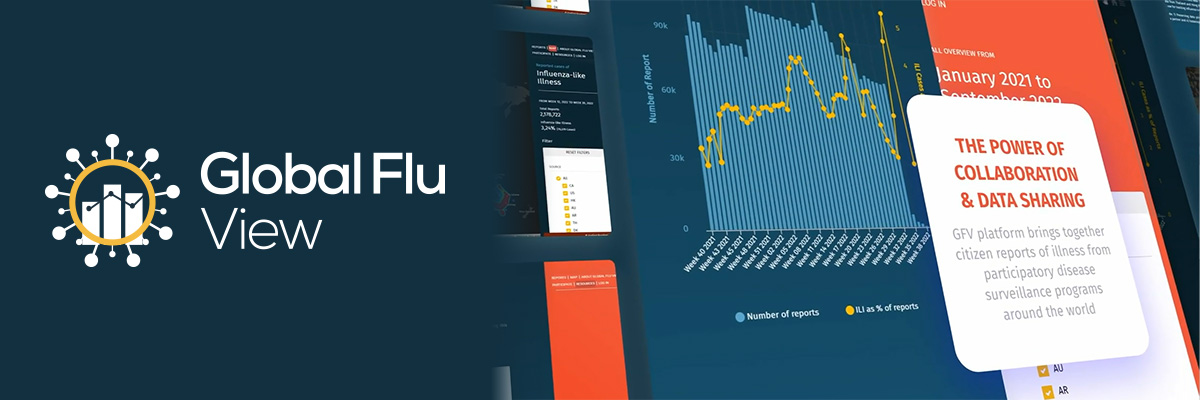
Innovative Global Disease Tracking Platform ‘Global Flu View’ Awarded to UArizona College of Public Health
An innovative digital web platform that visualizes self-reported influenza-like illness (ILI) data from several participatory surveillance programs around the world, named Global Flu View (GFV), has been awarded to the Global Health Institute at the Mel and Enid Zuckerman College of Public Health at the University of Arizona, along with funding to hire a faculty member who will oversee and advance the project.
With its broad reach and local participatory data gathering approach, the GFV platform has the potential to identify disease outbreaks early so that health officials can respond quickly and stop the spread. By bringing GFV into the College of Public Health at the University of Arizona, faculty and students will be able to learn about this powerful new public health tool and gather global data for response and research.
Developed by the non-profit Ending Pandemics, the creation of the GFV platform was guided by the leadership of Mark Smolinski, MD, MPH, and his team and funded by the Skoll Foundation. Dr. Smolinski, an alumnus and longtime supporter of the Zuckerman College of Public Health, founded Ending Pandemics, and he brings extensive experience tracking and targeting infectious disease with both governmental and non-governmental agencies.