

Undergraduate Programs
Start on your journey into the world of health and wellness.
Students majoring at The Zuckerman College of Public Health are ready to help communities achieve greater health. Roll up your sleeves and work alongside professors, advisors, classmates, alumni, and community partners all with the same goal: help people live healthier, happier lives.
Our Bachelor's Degrees

The Bachelor of Arts in Wellness and Health Promotion Practice focuses on helping individuals and communities achieve healthier lives through evidence-based health promotion, wellness strategies, and prevention. Students explore how social, behavioral, environmental, and community factors influence health while developing practical skills to design and implement programs that promote well-being and improve quality of life. The Bachelor of Arts (BA) in Wellness and Health Promotion Practice is available with three different degree emphasis options.

The Bachelor of Science in Public Health focuses on improving the health and well-being of communities through disease prevention, health promotion, and evidence-based public health practices. Students explore the social, environmental, and behavioral factors that influence health while developing skills to address health challenges, reduce disparities, and create healthier communities. The Bachelor of Science (BS) in Public Health has seven different emphasis options available.

Both the Bachelor of Arts in Wellness and Health Promotion Practice and the Bachelor of Science in Public Health are offered through the Arizona Online Campus, providing students with flexible, online pathways to earn their degree while preparing for careers that promote healthier individuals and communities.
Start here. Transfer in. Accelerate forward.
Explore flexible pathways designed to help every student reach their public health and wellness goals—whether you're starting fresh, transferring credits, or ready to accelerate your degree.
Newly Admitted Students
Congratulations on your admission to The University of Arizona, your College of Public Health journey starts here. We encourage our newly admitted students to explore our website designed just for you with next steps, resources, and ways to connect before you arrive!
Transfer Students
Utilize one of our many pathways to go from community college (or even high school) directly into one of our Public Health degree options!
Accelerated BS & MPH Programs
The Accelerated Master's Program (AMP) is a 3+2 BS/MPH pathway designed for Public Health students who want to accelerate their academic journey and earn both degrees in just five years.
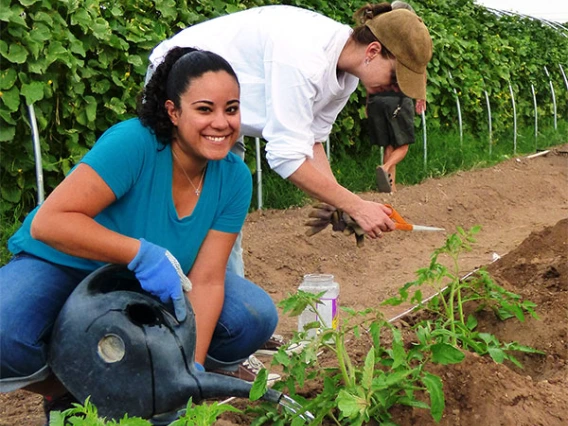



Learn. Experience. Engage. Make an impact.
Get hands-on in public health, explore the world through study abroad, and get involved beyond the classroom.

You will gain hands on, real world experience.
You will have the life-changing opportunity to help people in Tucson and all over the world through internships and field work.

Think Global. Impact Health
Studying abroad is your opportunity to step outside the classroom, experience public health in a new cultural context, and gain a global perspective that will shape the way you make an impact.

Public Health Spotlight
Our MEZCOPH Public Health Ambassadors recently had the opportunity to attend the Basic Needs Benefit Dinner, where they represented the college and connected with campus partners.
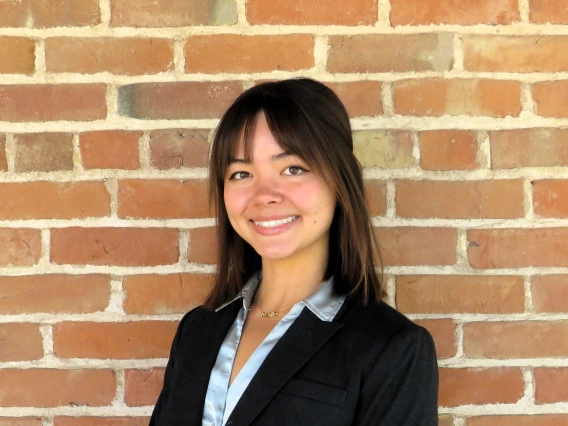
Sage Liu
Public Health Student
“I first started with only a minor, but after taking one Public Health course I fell in love with the field and its potential to improve the health and well-being at a population scale. Something I really appreciate about Public Health is the emphasis on interdisciplinary connections, integrating every aspect of a person's life to create a more holistic understanding of health.”

Priscilla Nguyen
Public Health Alumnus
“After graduating, I hope to be admitted to an MD/MPH program and go into a trauma program. After working as a doctor, I want to work in the public health field in infectious diseases and eventually make my way back to a university to teach.”

Iman Hakim, MD, PhD, MPH
Dean & Professor
“We lead with both cutting-edge science and deep community commitments. Our faculty, students, and alumni are finding new approaches to chronic disease prevention, community public health preparedness, family wellness, and advocacy for public health policy.”
All Our Programs Are Accredited
The Mel and Enid Zuckerman College of Public Health has held continuous accreditation from the Council on Education for Public Health (CEPH) since 2003 and is accredited through December 31, 2027.